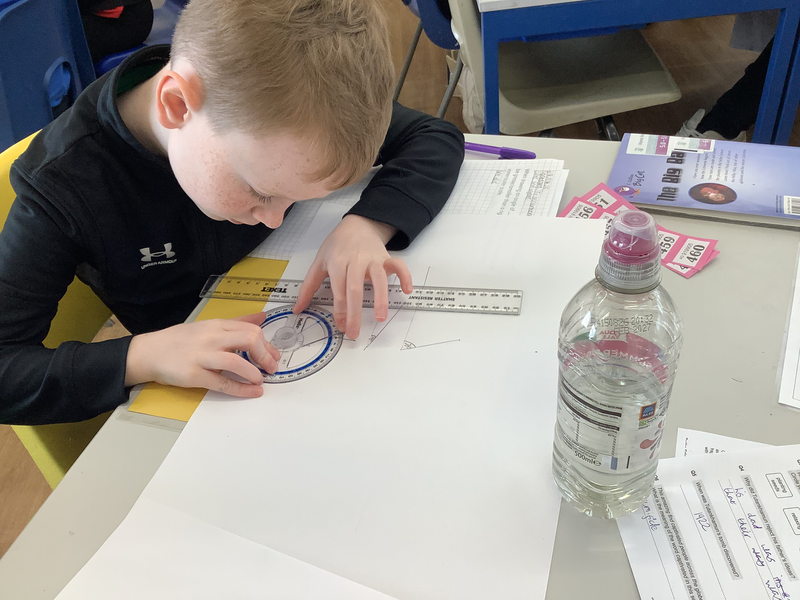
Being a Mathematician
Mathematics is a core skills which the children will use over the course of their lives and through many other curriculum areas.
The skills of mathematics are vast and vital for children. Not only will the children learn the fluency and recall of numbers but also develop the skills of reasoning and being able to apply their mathematical thinking.
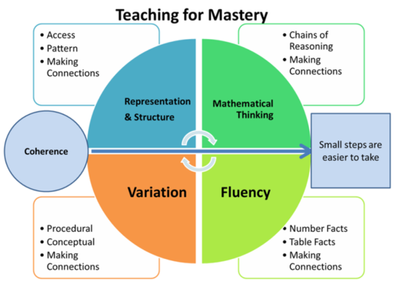
Core to the teaching of mathematics are the Five Big Ideas of Mastery.
Being a Mathematician
The children will be mathematicians daily. We organise the teaching into three ‘blocks’ of learning. Each one is important and focusing the childrens learning on specific elements. The 5 Big Ideas run through each of the blocks.
Early Morning Maths
Early morning maths is an opportunity for children to recall and retrieve previous learning. The children complete a range of previously taught maths to review, recall and retrieve knowledge. They also have the opportunity to discuss with their partners and with the teacher to review and correct their own work.
Mastering Number
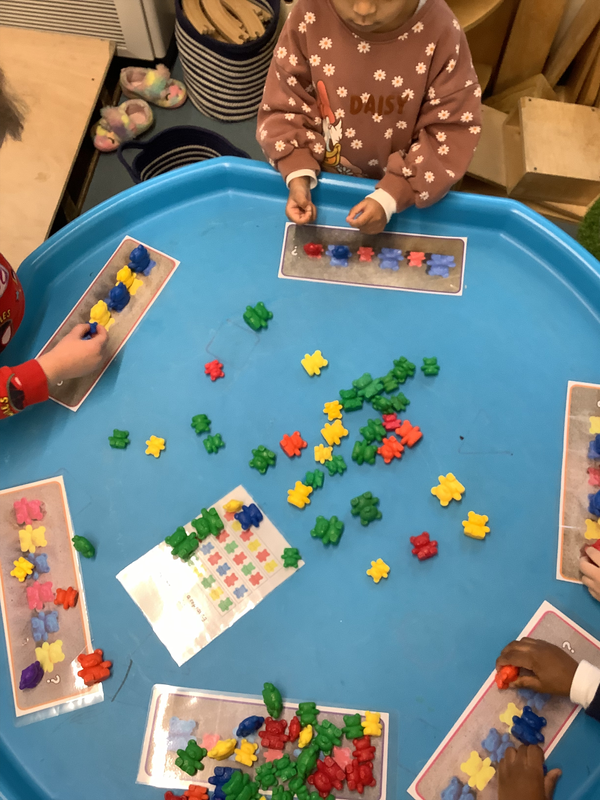
In this block, the children look at mastering their understanding of number. They aim to develop their rapid recall of number facts and to use this in developing their working memory so when they move onto reasoning and other areas of maths they have a solid foundation of number. This is through the NCETM Mastering Number (KS1) and Mastering Number Plus (KS2). Years 3 and 4 also use this time to develop their understanding and quick recall of times tables through songs, flashcards and games.
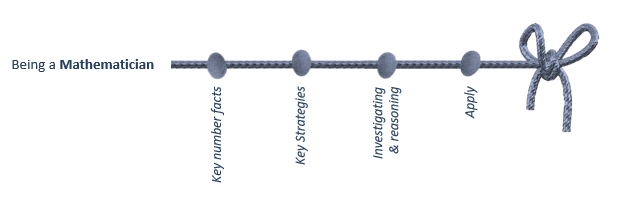
Being a Mathematician
This is the daily maths ‘lesson’ which follows a thread of learning which develops skills and applies these to investigations, reasoning and real life scenarios. As with all of our teaching, maths is taught using the I do, we do, you do structure to allow children space to watch and join in with strategies before moving towards independence.
We build up the learning through the following phases:
- Key facts: A review of key facts and previously taught areas of maths which will underpin the strand of maths being studied- such as number facts and key vocabulary.
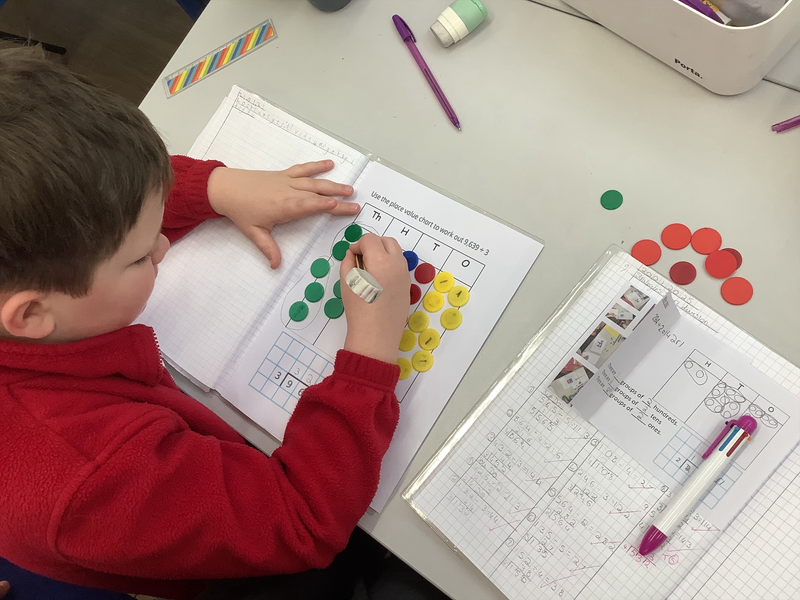
- Key Strategies: Children are taught the techniques needed for the strand of maths. We use small steps to build up kowledge and strategies. Children will develop their skills through concrete and pictoral opportunities (manipulatives and images that help children to see the maths) before moving on to more abstract representations of the maths. Children also have many opportunities to reason about their learning, both through class discussions and discrete reasoning activities.
- Investigate: When children have a fluent grasp of the number and procedures, they will explore open ended problems, real life scenarios, investigations and puzzles. These allow them to experiment with and deepen their understanding.
- Apply: In this final stage, children have the chance to apply their skills in answering questions and problems. We use the R.U.C.S.A.C system to help them solve problems in a logical manner. Finally, children take a 'Hot Task' to show how well they can apply their new learning independently.