Being a Tolerant Person
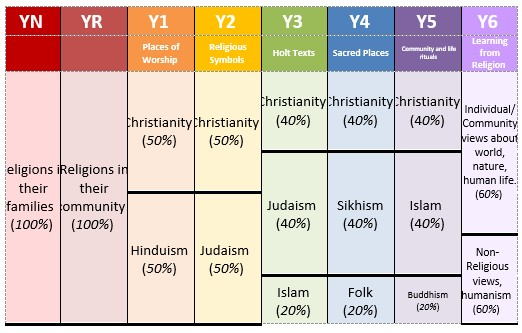
At our school, we follow the Medway Agreed Syllabus for Religious Education, studying key themes within each religion to build pupils’ knowledge progressively across year groups. Pupils develop an understanding of different beliefs, values and traditions, while encouraging respect and reflection.
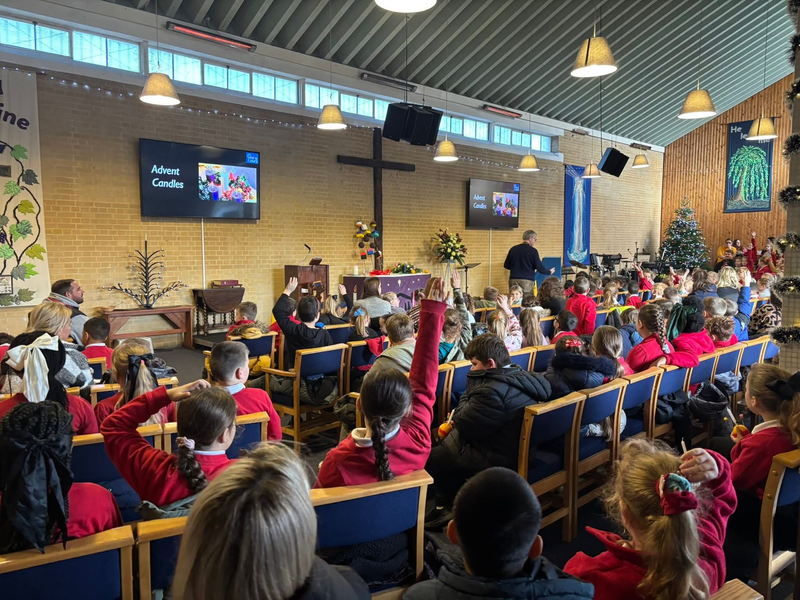
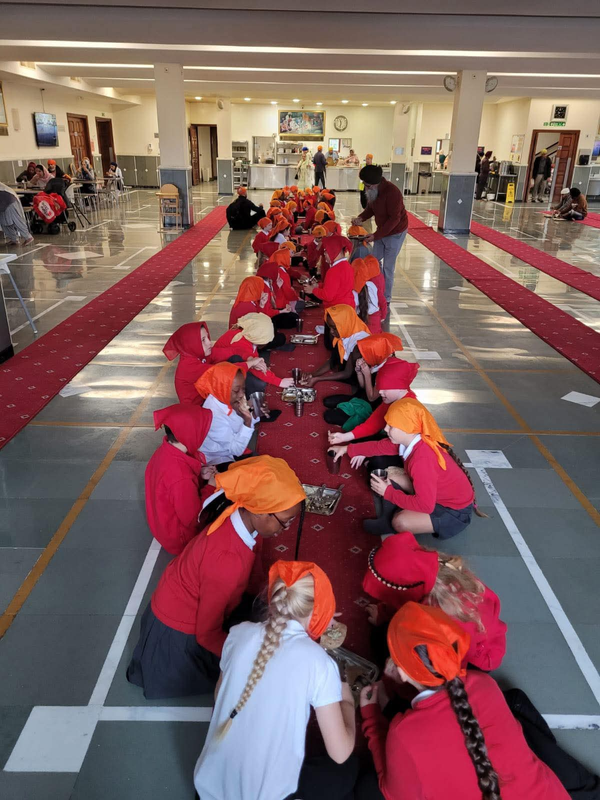
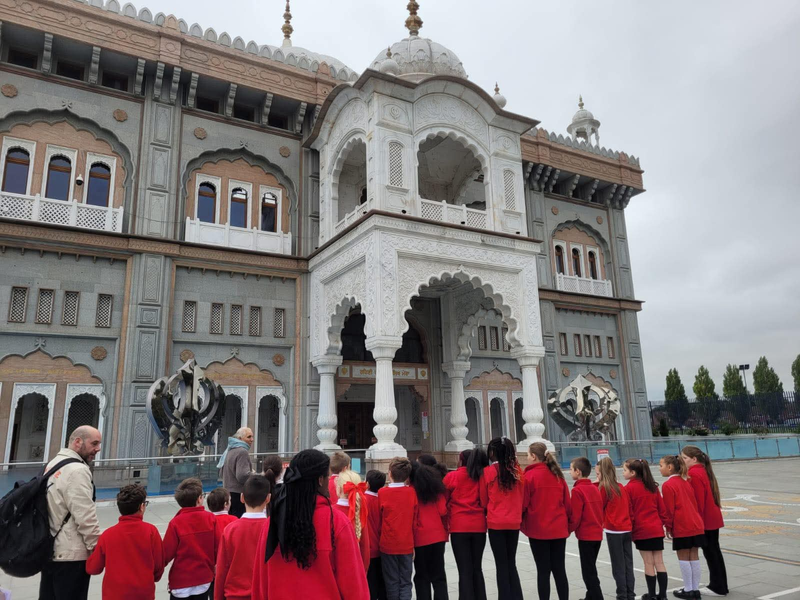
Learning is enriched through the use of artefacts, stories and a range of sources, allowing children to explore religions in a meaningful and engaging way. We also provide opportunities for first-hand experiences by visiting places of worship, including a variety of churches and the local gurdwara, helping pupils to connect their learning to real-life communities.
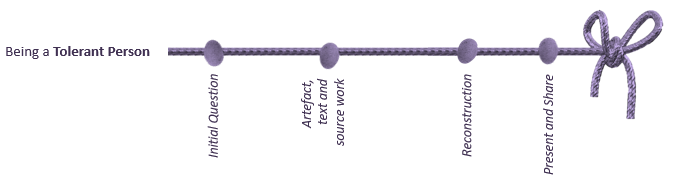
Initial Question: An RE learning sequence begins with an initial question that encourages curiosity and reflection, such as “What do people believe about…?” or “Why is this belief important?” This question shapes the direction of enquiry.
Artefacts, Texts and Source Work: Students then explore artefacts, texts, and source work, examining religious objects, sacred writings, stories, and accounts. They consider meanings, symbolism, and the perspectives of different believers.
Reconstruction: Next, learners move into reconstruction, where they use what they have discovered to build understanding of beliefs, practices, and ways of life. They explain ideas, make connections, and consider different viewpoints.
Present & Share: Finally, students present and share their learning, expressing their understanding through discussion, writing, or creative work. This stage encourages reflection, dialogue, and respect for diverse beliefs.